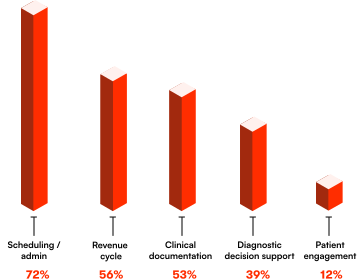
Consolidation
86%
of independents have been approached by private equity
An original survey of 156 dermatology practice owner-operators on financial visibility, private equity, workforce strain, and the AI in their exam rooms — a read on the business from the one seat that carries the risk.
of independents have been approached by private equity
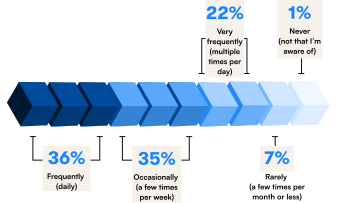
meet patients arriving with an AI diagnosis every week
feel pushed to see more patients than is clinically ideal
3 more findings
Read the full report to see every number.
The schedule is full, deposits keep arriving, the account holds a cushion after payroll. But operational momentum and financial health are not the same thing. Among owners who watch their numbers, 68% rate the practice's financial health as somewhat or very strong — and that confidence is where the story starts to come apart.
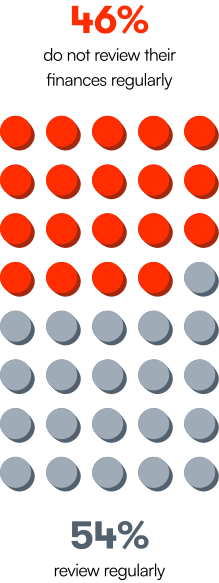
46% say not regularly, not for lack of caring, but because the day-to-day of running a practice leaves little room for it. Of that group, 24% have delegated oversight to a billing team or administrator and 22% review only occasionally.
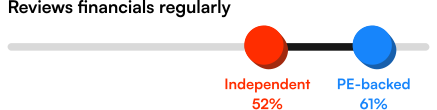
PE-backed practices arrive with a finance function; independents are building that capacity while running everything else, and they are nearly three times as likely to delegate financial oversight completely (27% vs. 10%).
The pattern looks backward at first. Visibility doesn't create the leakage — it reveals it. The owners who aren't looking report less because they can't see what's slipping.
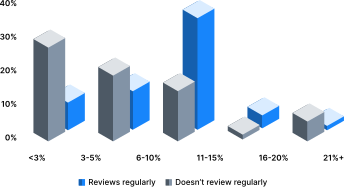
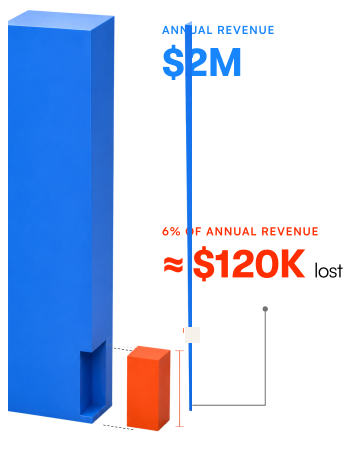
On a $2M practice, a sustained 6% is roughly $120,000 a year — illustrative, but at independent-practice margins it's the difference between a hire made and a hire deferred. A federal review found 42% of Medicare E&M claims, the coding backbone of a derm visit, were billed at the wrong level, much of it invisible without a close look.
Owning a dermatology practice today is fundamentally different than it was twenty years ago. The opportunity to remain independent is still there, but it requires a level of operational discipline that simply wasn't necessary in the same way before…
Demand is no longer medical need alone. Social media, aesthetics and prevention press owners past the pace they'd choose, and the consolidators have already called nearly everyone.
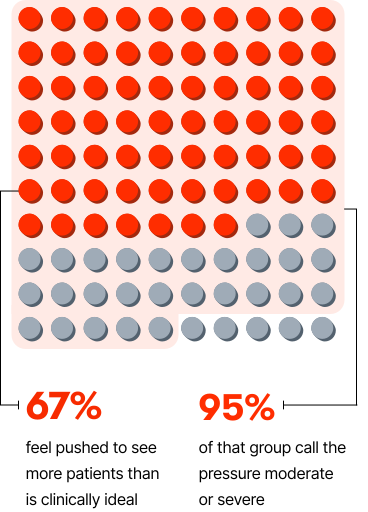
67% feel pushed to see more patients than is clinically ideal, and 95% of them call that pressure moderate or severe — roughly 63% of all owners running at the edge of capacity with no easy way to add more.
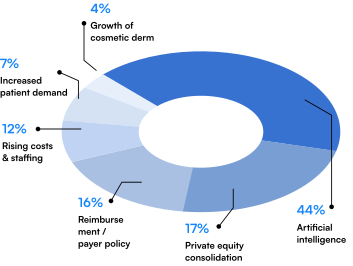
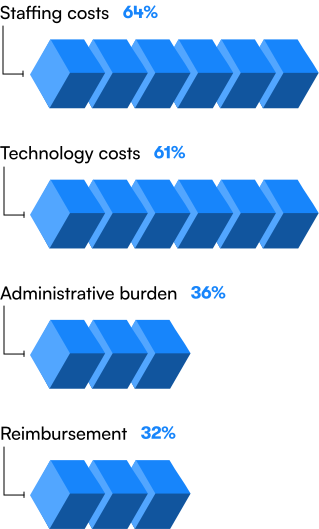
The expensive part of running a practice is increasingly the running of it, not getting paid for the work. Reimbursement, the pressure the industry talks about most, lands last.
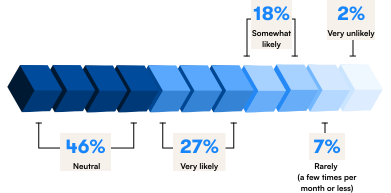
86% of independents report being approached by a private equity firm. What they do with the call is more measured — open consideration, not resistance, with very few ruling it out.
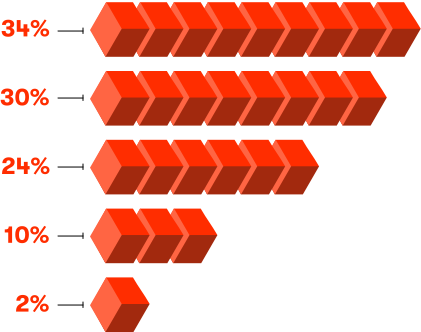
Operational support (34%), financial security or a clean exit (30%), and administrative relief (24%) — someone to carry the heaviest parts of the business.
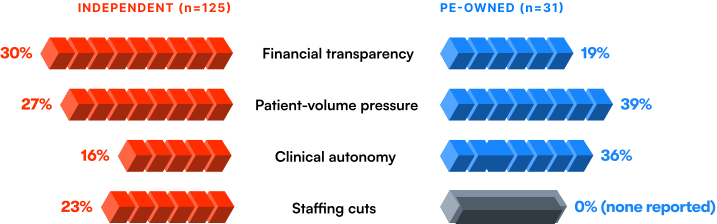
20% of independents name staffing cuts as a top worry about private equity. Not one already-PE-owned dermatologist named it at all. The PE base is small, so read it as directional — but it suggests the anxieties before a sale aren't always the realities owners report after.
Running a private dermatology practice in 2026 is, more than anything, a test of operational endurance. It means constantly balancing patient care against staffing shortages, rising overhead, insurance delays, compliance requirements, technology costs, and relentless administrative demands — all of which land on the owner's desk at once.
And as dermatology continues to consolidate, smaller independent practices face an added strain: competing against larger groups with deeper resources, stronger negotiating power, and centralized support, all while trying to stay efficient without losing the personal, physician-led patient experience that made independence worth choosing in the first place.
The State of Independent Dermatology 2026, our independent survey of 156 practice owners on the forces reshaping private practice.